
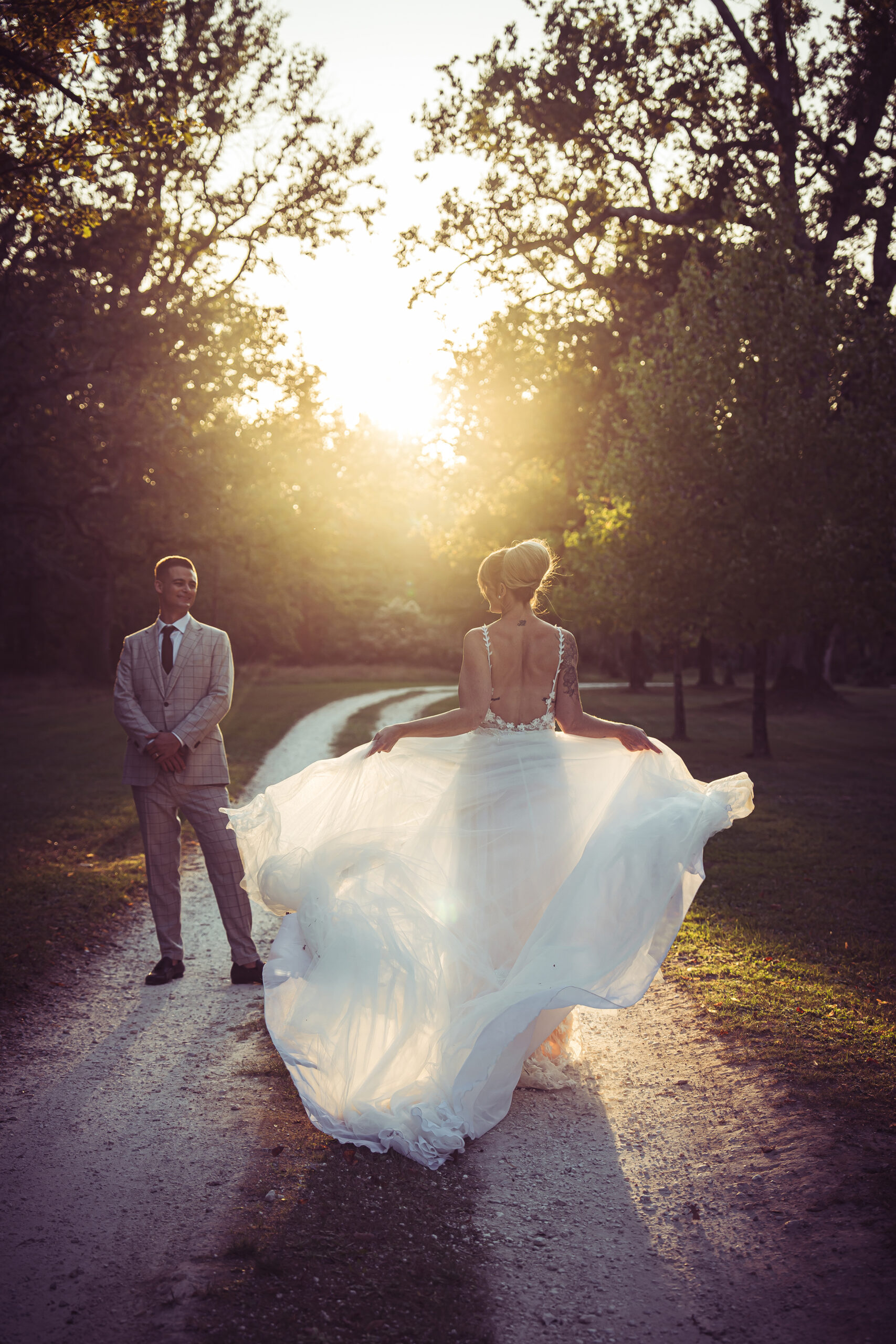
You can feel the difference before you know how to name it. One gallery feels softly cinematic, layered with warmth and texture. Another feels crisp, luminous and immediate, with every detail rendered in fine clarity. When couples ask about film vs digital wedding photos, they are rarely asking only about cameras. They are asking how their wedding will be remembered.
For a luxury celebration, that question matters. Your photographs are not simply a record of what was worn, where the candles were placed, or how the tables were dressed. They hold atmosphere. They preserve the hush before the ceremony, the movement of silk in late afternoon light, the look on your partner’s face when the day becomes real. The choice between film and digital shapes how those moments are interpreted.
Film vs digital wedding photos: the real difference
The clearest way to think about film and digital is this: neither is inherently better. They are different visual languages.
Film has a softness that feels romantic without trying too hard. It handles highlights in a particularly beautiful way, which is why skin can appear luminous and flattering, and why bright skies or white dresses often retain a gentle elegance rather than feeling harsh. Colour on film tends to feel layered and organic. There is texture, subtle grain, and a sense of depth that many couples describe as timeless.
Digital, by contrast, offers precision. It captures detail with remarkable consistency and gives photographers more agility in fast-changing conditions. If your day includes a dark church, an overcast English afternoon, sparklers after sunset and a candlelit marquee, digital allows those transitions to be handled with speed and control. The result can still be romantic and refined, but the character is usually cleaner and more exact.
That is why the conversation is never as simple as vintage versus modern. It is more nuanced than that. Film often feels painterly and emotive. Digital often feels polished and versatile. Both can be beautiful in expert hands.
Why film still holds such appeal
There is a reason film remains so desired in the luxury wedding space. It does not just look expensive. It feels considered.
Because each frame matters, shooting on film encourages a slower, more intentional approach. Portraits are composed with care. Quiet in-between moments are noticed. There is a discipline to it that often translates into imagery with a strong editorial sensibility and emotional restraint. For couples drawn to fashion, art, architecture and beautifully curated details, that quality can be deeply appealing.
Film is also exceptionally flattering for romance-led imagery. It softens in all the right places. Morning light through curtains, veil layers, cream florals, antique interiors, sunlit stone facades – film tends to render them with grace. It has a tenderness that suits weddings where mood and atmosphere matter just as much as detail.
That said, film is not magic. It is less forgiving in very low light, and it offers less immediate flexibility. It also requires true experience. Beautiful film photography is not created by using film stock alone, but by understanding exposure, scanning, colour balance and the rhythm of a wedding day.
Where digital wedding photography shines
Digital deserves more credit than it sometimes receives in conversations about artistry. At its best, digital is not cold or clinical. It is sophisticated, responsive and wonderfully capable.
A wedding day moves quickly. British weather can shift without warning. Light changes from room to room and hour to hour. Digital allows a photographer to adapt in real time, particularly during moments that cannot be repeated. The first kiss, confetti in bright noon sun, an impromptu speech, your father’s expression during the ceremony – these are fleeting, and digital makes it easier to capture them with confidence.
It also excels when coverage is extensive and fast-paced. If you are planning a city wedding with multiple locations, a winter celebration that runs well into the evening, or a destination weekend with events over several days, digital offers practical advantages without sacrificing beauty.
For many couples, digital is also reassuring. There is comfort in knowing your photographer can work fluidly through dark receptions, changing weather and energetic dance floors. With the right artistic direction, digital imagery can still feel soulful, elegant and deeply personal.
What film vs digital wedding photos look like in practice
The difference often reveals itself less in a single image and more across a full gallery.
A film-led gallery tends to feel cohesive in a very particular way. Colours flow softly from one scene to the next. Skin tones remain gentle. Even where there is contrast, it rarely feels sharp or insistent. The overall impression is romantic, elevated and slightly nostalgic, though the best film work still feels modern.
A digital-led gallery often feels more varied and dynamic. You may see greater clarity in movement, stronger performance in evening light and more visible detail in layered styling, tablescapes and interiors. It can feel editorial in a cleaner, more contemporary sense.
Neither response is wrong. Some couples want their wedding to feel like a beautifully remembered dream. Others want every expression, texture and transition captured with crisp honesty. Most, if they are being truthful, want a little of both.
Which choice suits your wedding style?
If you are hosting a refined country house wedding with an emphasis on fashion, florals and a romantic atmosphere, film may suit the mood beautifully. It pairs especially well with elegant venues, soft palettes, black tie dress codes and celebrations where the visual experience has been thoughtfully designed.
If your wedding includes many moving parts, challenging light, winter timings or a more documentary-led pace, digital may be the stronger foundation. It gives flexibility without asking the day to slow down.
There is also the question of personality. Some couples are drawn to the emotion of film because they want their photographs to feel almost heirloom-like from the start. Others prefer the confidence and adaptability of digital because they value coverage, consistency and responsiveness. The right fit depends not only on your venue or season, but on what you want to feel when you look back.
The most thoughtful answer is often both
For many high-end weddings, the most beautiful solution is not choosing one over the other. It is blending them.
A hybrid approach allows the romance of film and the reliability of digital to work together. Film can be used for portraits, details, still moments and scenes where light is particularly beautiful. Digital can carry the faster documentary coverage, lower-light portions of the day and anything unpredictable. The gallery then becomes rich in both atmosphere and range.
This approach is especially well suited to couples who want timelessness without compromise. You receive the softness and emotion that make film so sought after, alongside the versatility needed to cover a real wedding day with calm assurance. For many luxury commissions, it is the most balanced and artful way forward.
What matters more than the format
The camera matters. The photographer matters more.
A beautiful wedding gallery is not created by technology alone. It comes from judgement – when to step in, when to hold back, how to shape portraits without stiffness, how to notice the quiet emotional thread running through the day. A photographer with a strong eye and a clear artistic point of view can create extraordinary work on film, digital, or both.
That is especially true if you are investing in a luxury experience. You are not simply choosing an aesthetic. You are choosing how you want to be seen, guided and remembered. The best results come when the visual style, technical approach and emotional sensibility all align.
At Teri V Photography, that often means creating imagery that feels both soulful and editorial, where documentary honesty meets refined composition, and where film is used with intention rather than novelty.
If you are comparing portfolios, look beyond whether a photographer mentions film. Notice how the work feels. Are the moments alive? Do the portraits feel natural yet elevated? Does the gallery hold atmosphere from beginning to end? Those answers will tell you far more than the format alone.
Your wedding photographs should feel like your love story at its most beautiful – not trend-led, not overly processed, and not disconnected from the day itself. Whether that is best told through film, digital, or a thoughtful blend of both, the right choice is the one that preserves not only how it looked, but how it felt.
+ view the comments
![Wedding couple during their ceremony at Hever Castle Loggia, with the lake behind them and guests seated in front. [Teri V Photography Wedding Timeline Guide]](https://terivphotography.co.uk/wp-content/uploads/2026/01/hever-castle-loggia-wedding-photographer-bride-groom-ceremony-1.jpg)


