
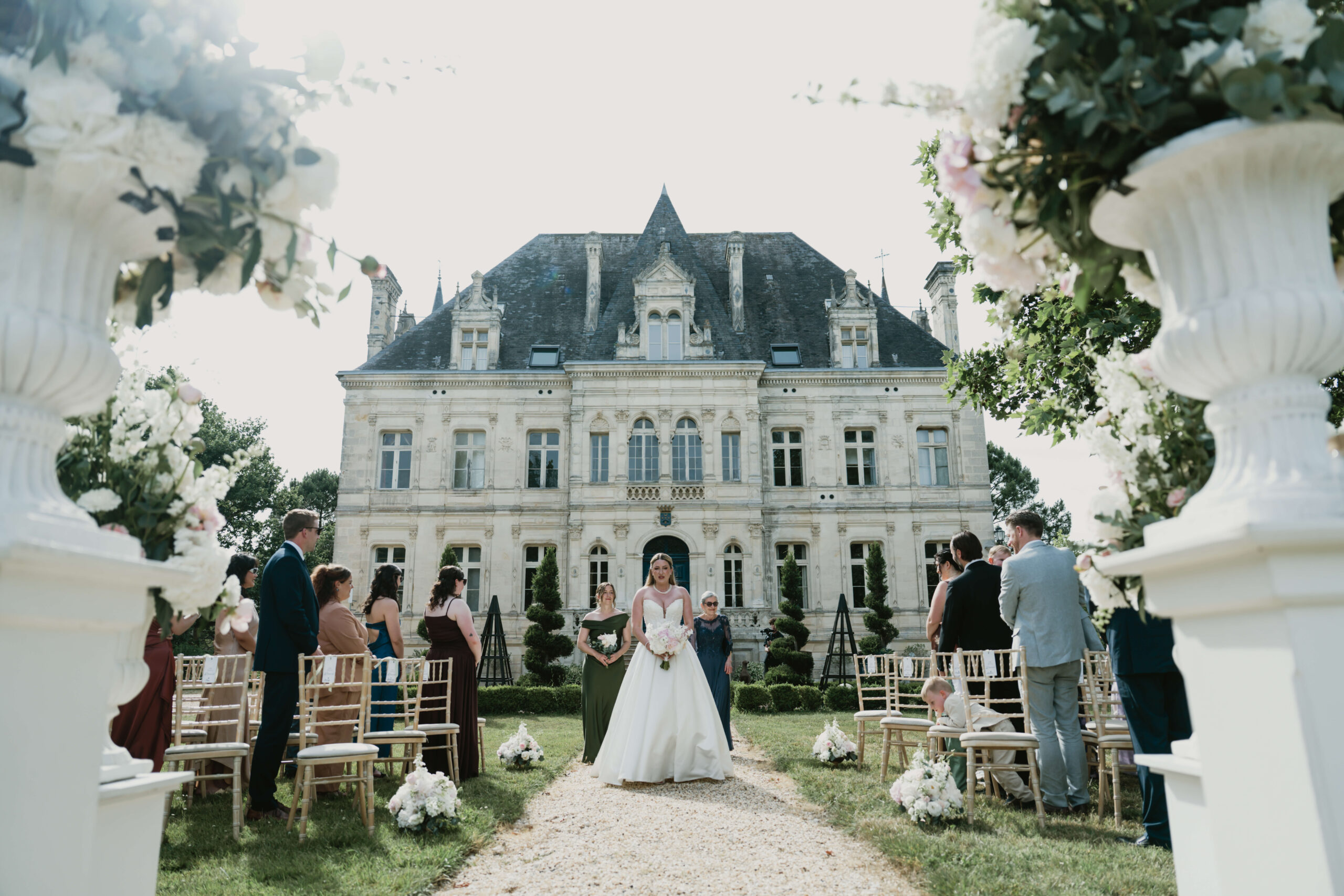
A château gives a wedding its own visual language: stone softened by evening light, grand staircases made for a sweeping entrance, formal gardens that invite stillness, and rooms alive with candlelight after dark. This guide to chateau wedding photography is for couples who want to honour all of that beauty while keeping their photographs personal, natural and unmistakably theirs.
The most memorable château wedding images do more than record an exquisite setting. They hold the feeling of being there: the hush before your ceremony, the nerves beneath a silk sleeve, the sound of your guests gathering on a sunlit terrace. The venue brings scale, but your connection brings the soul.
A Guide to Chateau Wedding Photography That Feels Personal
There is a temptation, at an extraordinary venue, to photograph every beautiful corner. And there should be space for the architecture, the gardens and the considered details you have chosen. Yet a château is at its most compelling when it becomes the setting for your love story, rather than the subject of every frame.
A thoughtful photographer will read the rhythm of the day and use the château with intention. A morning portrait may belong beside a tall window where soft light falls across plasterwork and antique mirrors. After the ceremony, a quiet walk through the grounds can offer a moment away from the celebration, with images that feel cinematic without appearing over-directed. By evening, the atmosphere shifts again: candlelit dining rooms, warm skin tones and movement on the dance floor call for a more instinctive, documentary approach.
The balance matters. You deserve photographs with a sense of occasion, alongside the unguarded glances and joyful chaos that make the day feel real years later.
Let Light Shape the Experience
Châteaux are often blessed with magnificent light, but they also come with particular photographic considerations. Deep interiors, thick walls and dramatic windows can create beautiful contrast. They can also turn a sunny afternoon into a surprisingly dark preparation room.
When planning your morning, choose a room with generous window light where possible. It need not be the largest room in the château. A quiet suite with elegant textures, clear surfaces and daylight is often more visually flattering than a grand but dim salon. Keep the immediate area around you relatively uncluttered, especially while getting ready. This gives your photographs room to breathe and allows the important details to feel intentional.
For your ceremony, consider where the sun will sit at the time you plan to marry. A courtyard ceremony in high summer may be dazzling at midday, while a later ceremony can bring softer light and a more relaxed mood. In cooler months, an indoor ceremony beside tall windows or in an orangery may offer a luminous alternative. There is no single correct choice, but knowing the light in advance allows your timeline to work with the venue rather than against it.
The value of a little breathing room
The most elegant photographs are rarely rushed. Build in pockets of time: a few unhurried minutes before you leave for the ceremony, enough space for family photographs without losing the drinks reception, and a gentle window around sunset for portraits together.
Ten or fifteen minutes is often all that is needed. This is not a prolonged photoshoot that takes you away from your guests. It is a pause to exhale, take in the day and create a small collection of beautifully composed portraits. The resulting photographs tend to feel more relaxed because you were allowed to be present in them.
If your wedding takes place in France or elsewhere in Europe, sunset may arrive later than expected in summer. Your photographer can help shape a plan that allows for an earlier set of portraits in flattering daylight, followed by a brief return outdoors when the evening becomes softer and more atmospheric.
Choose Locations With Meaning, Not Just Grandeur
The best château venues offer abundance: a stone façade, sculpted gardens, woodland paths, a chapel, an old gatehouse, velvet-lined rooms and perhaps views across vineyards or rolling countryside. You do not need to use them all.
Choose two or three areas that reflect the feeling you want your images to carry. A formal garden suits a polished, editorial portrait with a sense of symmetry. A wild meadow or tree-lined avenue offers something softer and more romantic. A dramatic staircase can be perfect for a fashion-led image, while a quiet corner of the library may feel intimate and timeless.
It is also worth considering how you want to remember the venue. Wide photographs place your celebration within the landscape and architecture. Closer images tell a different story: hands resting on a balcony, your veil caught by the breeze, the delicate ageing of a painted door behind you. Both perspectives belong in a complete gallery.
An experienced photographer will often find beauty in places that are not immediately obvious. The side of a courtyard may catch the most beautiful reflected light. A simple stone wall may make a stronger setting for a portrait than the busiest part of the gardens. This discernment is especially valuable at a venue with so much visual possibility.
Plan Details That Photograph Beautifully
A château wedding is naturally rich in texture, so there is no need to over-style every surface. The most refined celebrations tend to have a clear visual thread rather than a collection of competing moments.
Think about colour in relation to the venue. Soft greens, powder blue, antique gold, ivory and muted rose often sit beautifully against stone and historic interiors. For a bolder atmosphere, black tie, sculptural white florals and deep berry tones can create a striking contrast. What matters is that the palette feels like an extension of you, not simply a reaction to a trend.
Ask your planner or venue team about practical details early on. Are candles permitted? Can confetti be thrown in the courtyard? Is there a preferred location for group photographs? Will the gardens be open to other visitors? These answers influence the flow of the day and protect time for the images that matter most.
If you are investing in stationery, fashion, flowers or heirloom jewellery, set these aside in one place before the morning begins. A photographer can photograph them quickly and artfully while hair and make-up is underway. This small piece of organisation keeps the beginning of the day calm and ensures the quieter details of your celebration are not lost.
Keep Group Portraits Efficient and Warm
Family photographs matter, particularly at a destination wedding where loved ones may have travelled a great distance to celebrate with you. They do not need to feel formal or consume the whole drinks reception.
Prepare a concise list of the groupings that genuinely matter to you, usually immediate family, grandparents and your wedding party. Nominate someone who knows the key people to help gather them. With a clear plan and a location close to your reception, these portraits can be completed with warmth and ease.
The rest of the reception should belong to you. Champagne on the terrace, embraces with friends, the sound of laughter across the gardens: these are often the images couples return to most. They reveal the scale of the celebration, but also the care that brought everyone there.
Trust the Evening to Tell a Different Story
As daylight fades, a château becomes more intimate. Candles begin to glow against old stone, chandeliers gather warmth and the energy of the day loosens. This is where documentary photography becomes particularly powerful.
Allow your tables to be fully dressed before guests enter if possible, so the flowers, linen and place settings can be photographed in their best light. During dinner, trust your photographer to observe rather than interrupt: a parent’s expression during a speech, hands reaching across the table, the sudden laughter that no one could have planned.
After dark, a few minutes outside can create quietly dramatic portraits. It depends on the weather, the layout of the venue and how much you want to step away from the party. Sometimes a candlelit doorway or a single pool of exterior light is all that is needed. These images can feel wonderfully cinematic, but should never come at the cost of your enjoyment.
A château wedding asks for a photographer who can move between grandeur and intimacy with confidence: someone attentive to the architecture, but even more attentive to the people within it. When the planning is considered and the experience is calm, your photographs become more than beautiful evidence of a remarkable place. They become a way back to the feeling of finding one another there.
+ view the comments
![Wedding couple during their ceremony at Hever Castle Loggia, with the lake behind them and guests seated in front. [Teri V Photography Wedding Timeline Guide]](https://terivphotography.co.uk/wp-content/uploads/2026/01/hever-castle-loggia-wedding-photographer-bride-groom-ceremony-1.jpg)


