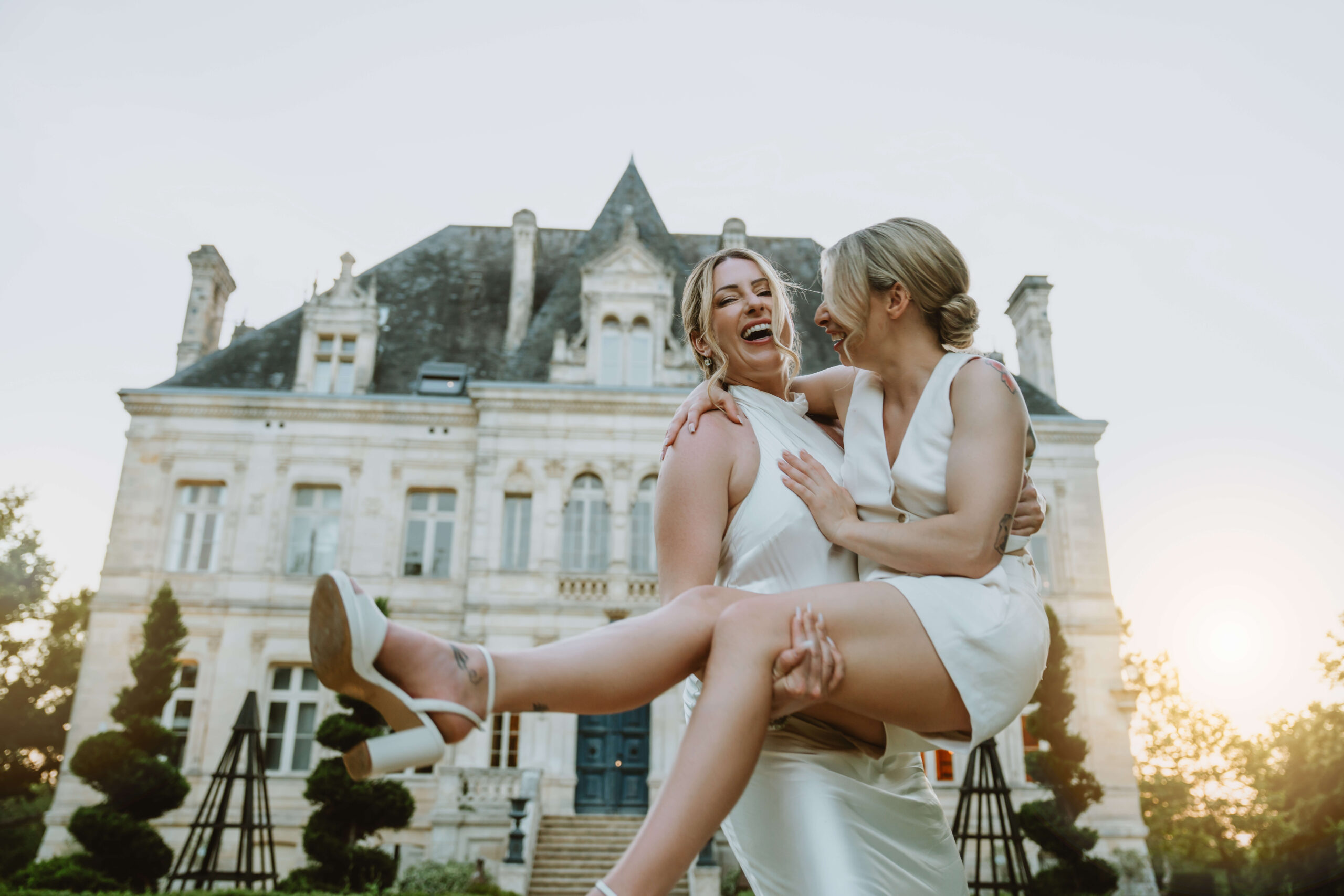
A bride pauses at the top of a sweeping staircase, silk pooling around her feet, the quiet before the ceremony held in her expression. The strongest editorial bridal portrait examples are rarely about an extravagant pose. They are about atmosphere, beautiful light and the small, instinctive gestures that make a portrait feel like part of your love story rather than a performance.
Editorial bridal photography brings a fashion-informed eye to the wedding day, while leaving room for tenderness, personality and the lived-in emotion of the occasion. It is polished, certainly, but never distant. A portrait should preserve how extraordinary you looked and, just as importantly, how the moment felt.
What makes a bridal portrait feel editorial?
An editorial portrait is intentional. Every element in the frame has a role: the angle of the light, the movement of a veil, the texture of an old plaster wall, the negative space around a dress. It borrows the compositional confidence of a magazine image, but should not ask you to become someone else for the camera.
For a wedding, this balance matters. Fashion imagery can be highly constructed; documentary photography is instinctive and responsive. Editorial bridal portraiture sits elegantly between them. There may be gentle direction, a considered location and a few unhurried minutes set aside, yet the expression, movement and mood remain entirely your own.
The setting has influence too. A London townhouse, a Sussex country estate or a sun-washed Italian palazzo each offers its own visual language. Architectural lines, generous windows and layered interiors can elevate an image, although a remarkable portrait does not depend on a grand venue. A simple doorway, a softly lit bedroom or an open stretch of landscape can be just as compelling when the light and feeling are right.
Editorial bridal portrait examples to inspire your day
The quiet window portrait
A bride standing beside a large window is a classic for good reason. Window light has a softness that flatters without erasing texture, and it creates natural depth across the face, gown and room. Rather than looking directly at the camera, she might adjust an earring, hold her bouquet loosely, or simply look out towards the day ahead.
This works beautifully during preparations, when anticipation is already present. Choose a room with calm surroundings where possible. A cluttered suite can distract from even the most exquisite dress, so a few minutes spent clearing bags, hangers and spare shoes protects the sense of ease in the final image.
The fashion-forward full-length frame
Some dresses deserve to be seen in their entirety. A full-length portrait celebrates the line of the silhouette, the scale of a train and the movement built into the design. In a grand hallway or against a pared-back wall, the bride can stand with a relaxed shift of weight rather than a rigid runway pose.
The difference lies in restraint. A slight turn through the shoulders, hands placed naturally, and a moment to breathe can create all the shape the frame needs. This is especially striking for brides wearing sculptural gowns, tailored suits, dramatic sleeves or a cathedral veil. The portrait feels elevated because the styling is given space, not because it is over-directed.
Veil movement in open air
A veil brings motion, softness and a touch of theatre to bridal portraits. In a garden, along a coast path or in the courtyard of a château, a light breeze can do much of the work. If the air is still, a careful lift from an attendant or photographer can create a sense of movement without turning the moment into a spectacle.
The most romantic images in this style are often made between poses: the veil falling back into place, a laugh after a failed attempt, a hand reaching to catch the edge of the tulle. These are the frames that keep editorial elegance connected to real emotion.
A portrait with architectural scale
A doorway, archway or staircase can make a bride appear wonderfully cinematic. The architecture supplies symmetry, shadow and scale, while the bride remains the emotional centre of the image. This approach suits historic houses, city venues and European destination celebrations particularly well.
There is a trade-off, however. A very wide frame may highlight the setting more than the details of your expression or make-up. The most considered coverage includes both: the dramatic image that shows your place within the venue and a closer portrait that lets the intimacy of the moment breathe.
The reflective mirror image
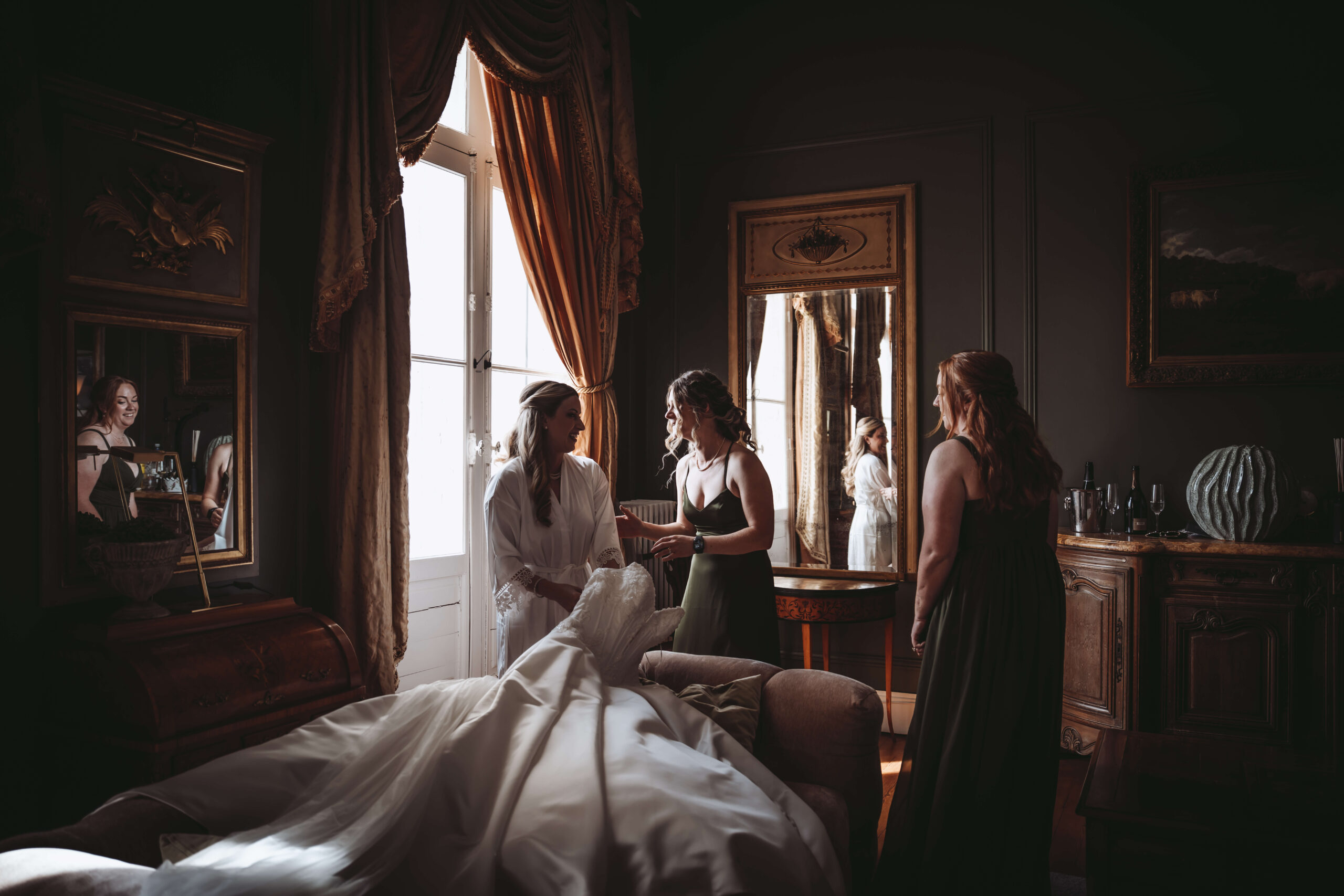
Mirror portraits offer a more private, artful perspective. They can capture the final adjustment of a veil, the fastening of a bracelet or that fleeting second before leaving for the ceremony. Reflections introduce layers without needing elaborate styling, and they work especially well in rooms with antique glass, dark wood or gentle morning light.
Not every mirror is useful. Modern mirrors framed by visual clutter, harsh overhead lighting or a crowded room can feel less refined. A photographer with an editorial eye will notice the possibilities quickly, then keep the process calm and unobtrusive.
Bridal portraits with a loved one nearby
Although the focus remains on the bride, the presence of a mother, sister, friend or child can bring soulful context to an editorial frame. A hand smoothing a sleeve, a shared glance or an embrace captured from a little distance gives the image narrative weight.
These portraits are not about arranging a perfect tableau. They are about making room for connection. If someone has helped you dress, gifted an heirloom or simply steadied your nerves that morning, inviting them into one or two frames often gives the photographs deeper resonance years later.
How to plan portraits without losing the feeling
The finest portraits need time, but not hours of rigid posing. A thoughtful wedding timeline usually allows for a short bridal portrait moment during preparations and a further window later in the day, when the light softens and the ceremony is behind you. Ten peaceful minutes can be more valuable than thirty rushed ones.
Share the elements you care about with your photographer in advance: the craftsmanship of your gown, a meaningful piece of jewellery, the interiors that first made you fall for your venue, or the landscape surrounding it. These details help shape an approach that feels personal rather than borrowed from a mood board.
It is equally useful to be honest about what does not feel like you. If a high-fashion, direct-to-camera image makes you feel self-conscious, there are other ways to create impact. Looking into the distance, walking slowly through a space or focusing on a tactile detail can deliver the same sense of editorial confidence with a gentler experience.
Choose light before location
A beautiful room with poor light may not be the best place for every portrait. Conversely, a modest corner near a generous window can produce something extraordinary. During a venue visit, notice where daylight falls in the morning and late afternoon, particularly in the room where you will get ready.
For outdoor portraits, overcast light offers softness and richness, while direct sunshine can be used more boldly for graphic shadows and a sun-drenched, European mood. Neither is inherently better. It depends on the atmosphere you want, the season, and how much time your day allows for stepping away.
Keep your styling coherent, not identical
Editorial images often feel harmonious because colour, fabric and texture speak to one another. This does not mean everything must match. A cool silk gown can look beautiful against warm stone; a modern minimal bouquet can sharpen the romance of an ornate room. The aim is considered contrast, not perfection.
Hair and make-up also deserve to be planned for movement. A style that feels beautiful when you first sit down should still look graceful after hugs, wind, dancing and happy tears. The most timeless portraits allow for a little life in the hair and softness in the skin.
The confidence behind the photograph
Many people say they are not naturally comfortable in front of the camera. That is not a limitation; it is simply useful information. The right direction is quiet and specific: where to place your hands, how to stand in the best light, when to move, and when to forget the camera entirely.
At Teri V Photography, the aim is never to make a wedding day feel like a fashion shoot. It is to create space for portraits that honour the artistry of your celebration while keeping you present for it. A calm, experienced approach lets refinement emerge naturally.
When you look back at your bridal portraits, the dress, flowers and setting will still matter. Yet the image you return to most may be the one in which you recognise yourself completely: poised, radiant and on the edge of a day you will never forget.
+ view the comments
![Wedding couple during their ceremony at Hever Castle Loggia, with the lake behind them and guests seated in front. [Teri V Photography Wedding Timeline Guide]](https://terivphotography.co.uk/wp-content/uploads/2026/01/hever-castle-loggia-wedding-photographer-bride-groom-ceremony-1.jpg)